
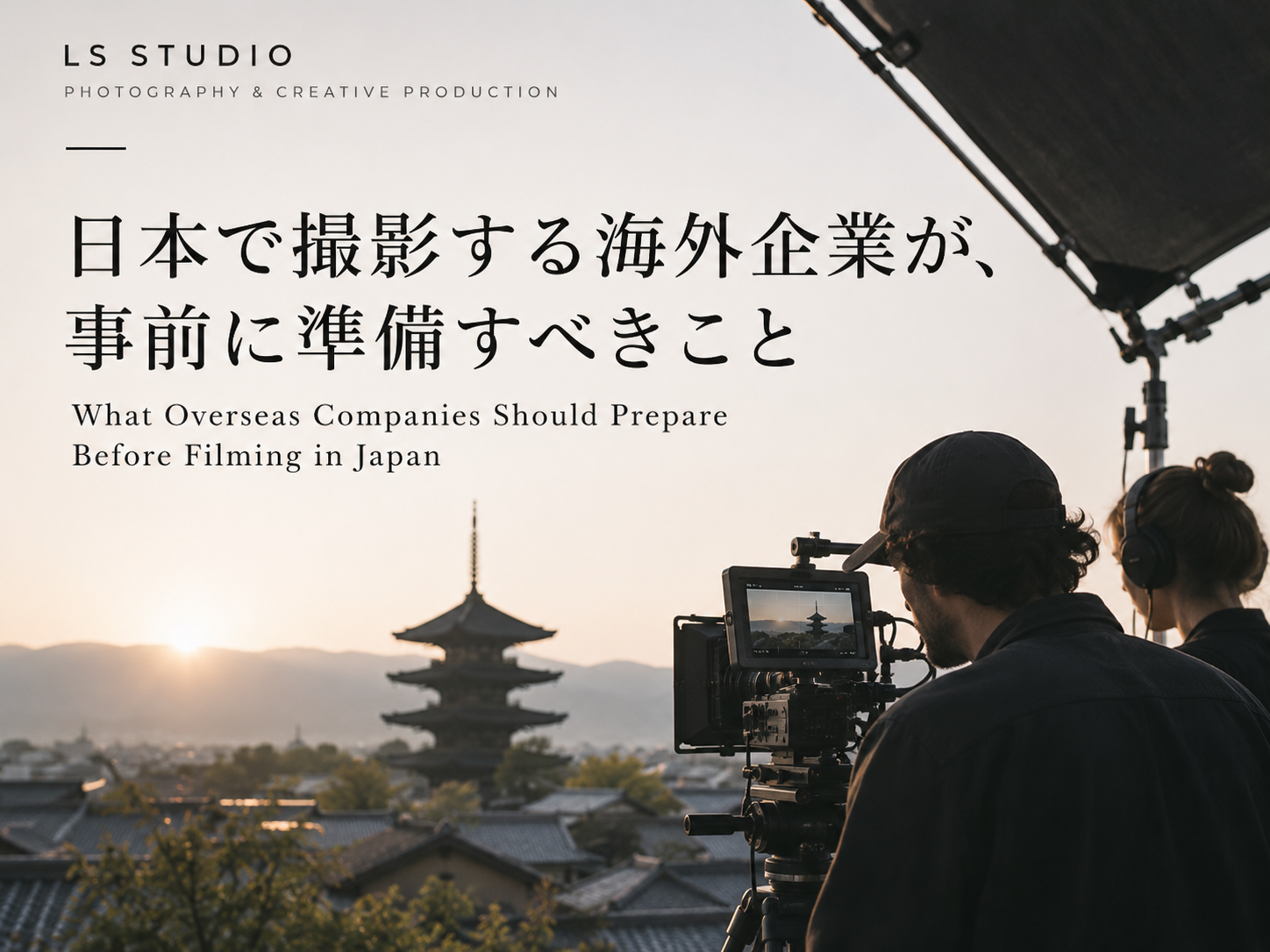
What International Companies Should Prepare Before Shooting in Japan
Creative & ProductionHotel & Hospitality
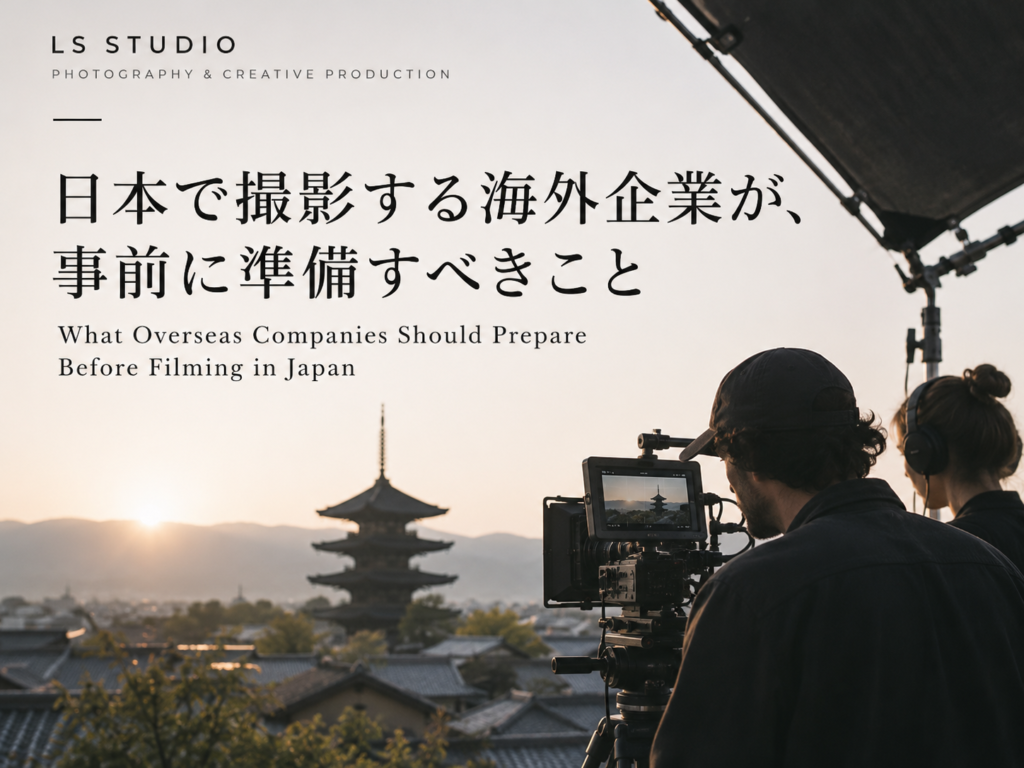
A location shooting guide to Japan for international clients
“We’d like to shoot photos or video in Japan.”
We often receive enquiries like this from international companies and production houses.
Advertising campaigns, corporate events, interviews, brand films, hotel and architectural photography — the purposes vary.
Japan has a wealth of attractive locations, from traditional architecture and nature to contemporary cityscapes.
But when commissioning a shoot from overseas, there are things to check in advance: language, permits, local rules, scheduling and more.
Here are the things that will help an international company’s shoot in Japan go smoothly.
01. Be clear about the purpose and where the content will be used
The first and most important question is what the photos and video will be used for.
Your company website?
An advertising campaign?
Social media content?
Or event documentation and internal materials?
Even for the same shoot, the equipment, crew and approach change depending on the purpose.
If you need both stills and video, it’s important to share that in advance.
To avoid needing extra shots after the fact, we recommend clarifying the media, the sizes you need, and whether you need horizontal or vertical compositions.
02. Check location permissions
One thing to pay particular attention to when shooting in Japan is permission to use locations.
Tourist sites, temples and shrines, parks, roads and commercial facilities may require permits or advance arrangements, depending on the shoot.
Kyoto, for example, is full of beautiful temples and historic streets.
But even where tourists can take photos freely, commercial shoots or shoots with large equipment are not necessarily allowed.
Shoots on public roads and drone filming also need to be checked against the relevant conditions.
Once you have decided where you want to shoot, it’s important to check with the site managers and relevant authorities as early as possible.
On the day, consideration for the people around you is essential too.
Beyond permits, I think an attitude of respecting the culture and environment of the place is what matters.
03. Build plenty of slack into your Japan schedule
When a crew flies in from overseas, they often want to cover as many locations as possible in a limited number of days.
But in Japanese cities, traffic, travel time and each location’s rules can mean things don’t go to plan.
In Kyoto in particular, some places become extremely crowded with tourists depending on the season.
It’s important to build a relaxed schedule that allows for travel between locations, load-in, setup and weather changes.
Rather than moving between several locations in a day, securing enough time at one location can ultimately lead to better photos and footage.
04. Communication in both Japanese and English
On shoots with international clients, language differences can affect how production runs.
Communication is needed at every stage: pre-shoot meetings, running the day, coordinating with venue staff, directing models and talent.
What matters most is not simply translating words.
It is understanding what the client wants to achieve, and shaping it into something that can be carried out on a Japanese set.
The overseas production company and the Japanese crew sharing the same picture.
Preparing reference photos, storyboards and shot lists in advance makes this much smoother.
05. Talent consent and usage rights
When people appear in the shoot, talent consent and the scope of use for the photos and video are key points to check.
Using photos on a company website and running them in an advertising campaign across many countries may require different checks.
It’s important to sort out talent contracts, use of likeness, music and location rights in advance.
In advertising especially, changing the usage terms after the shoot can require additional negotiation.
We recommend being clear from the shooting stage about the countries, media and period of use.
06. Decide on delivery and editing in advance
It’s also important to confirm delivery before the shoot.
For photographs, for example, this includes:
- The number of images and how they will be selected
- The scope of colour correction and retouching
- File formats for web, print and so on
- Your preferred delivery date
- How files will be handed over online
- How RAW files will be handled
For video, it helps to confirm the final length, whether subtitles are needed, vertical or horizontal formats, and the number of revision rounds.
With international clients, editing often happens after the shoot and delivery is done online.
It’s important to set a realistic schedule that allows for review across time zones.
07. The benefits of working with a local creative team
Bringing all the crew and equipment from overseas is not always the best option.
Working with a Japanese crew can make it easier to run production in a way that fits local conditions.
For example: choosing locations, coordinating schedules, communicating in Japanese and arranging local staff.
Another option is for the overseas creative director to come to Japan and work alongside a Japanese photographer.
Clarifying the purpose of the production and the division of roles makes cross-border creative work much easier.
08. LS STUDIO — Kyoto, Japan
LS STUDIO is based in Kyoto and works across photography, video, AI and creative direction.
We take on shoots for international clients and support production in Japan through communication in English.
We can shoot for many purposes: corporate events, portraits, hotels, architecture, products and advertising.
If you are considering a shoot in Japan, please get in touch even before the details are fixed.
We will help you organise the purpose, locations, schedule and crew, and propose the right approach.
Shooting in Japan is not just about capturing beautiful scenery. I believe it is also about understanding the culture and people of a place, and conveying their appeal with care.
From Kyoto to the world.
LS STUDIO values creative work that crosses borders.
LS STUDIO | Photography & Creative Production
Kyoto, Japan