
The Photographer Who Badmouths Clients on Set
Journal / Case Study
If the photos are good, is that enough to be a professional?
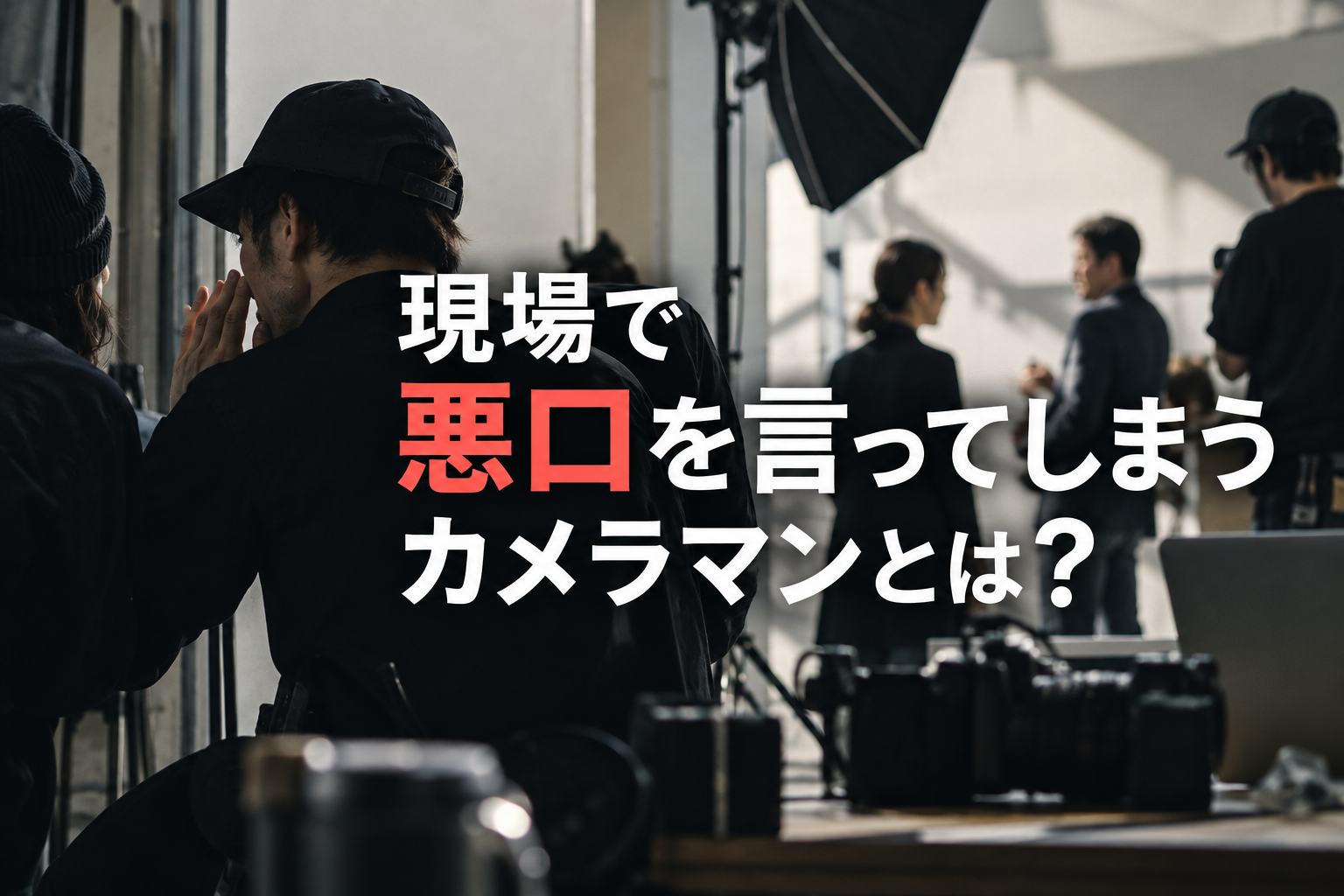
Recently I had a rather disappointing experience. On one project, I brought in an outside photographer. On set, that photographer was badmouthing my client — muttering complaints loudly enough for everyone nearby to hear.
Honestly, I was shocked. Everyone runs into demanding clients or disagrees with how a shoot is being run from time to time. But does that make it acceptable to talk that way about the client who commissioned the work?
Watching it, I couldn’t help thinking: “They probably say the same kind of thing about me somewhere.” I never confirmed that anything was actually said. But the moment someone makes you think that, the trust between you already has a problem.
Having concerns isn’t the same as badmouthing
All sorts of things go wrong on set. Schedules run over; the brief changes suddenly; clients make difficult requests; opinions differ on how to proceed. In my many years as a photographer, I’ve hardly ever had a shoot where everything went to plan.
That’s exactly why flexibility is needed on set. “I think that will be difficult.” “We can do it this way.” “I can’t guarantee quality under these conditions.” As a professional, those opinions are necessary. In fact, saying nothing about a problem and ending up with poor photos would be worse.
But voicing an opinion and belittling someone are completely different things. Calling someone stupid solves nothing. All it shows is contempt.
After the shoot, I spoke to them directly
I didn’t want to leave what I’d seen unaddressed. So after the shoot, I talked with the photographer directly — about why they’d said those things, why they’d voiced complaints loudly enough for others to hear, and about how we each approach our work.
Unfortunately, we never found common ground. Everyone has their own values, of course. I don’t think my view is right in every respect, and they surely have their side too. But I felt there was a big gap between their attitude and the approach to work I care about.
And it reminded me: you can’t choose who to work with on photographic skill alone.
Photographers aren’t above their clients
Photography demands specialist knowledge and skill: reading light, building composition, understanding equipment, making decisions on set. Some of it only comes with years of experience. Taking pride in your craft matters.
But that expertise can quietly become a reason to look down on others. “You don’t even know that?” “You won’t get good photos with directions like that.” “This client has no idea.”
Think about it for a moment. Clients aren’t photography experts — that’s precisely why they hire us. Not knowing much about photography is nothing to be ashamed of. If anything, understanding what non-experts want and bringing it to life is exactly what we professionals are for.
Explaining what someone doesn’t understand in a way they can. Proposing a workable approach when a request is difficult. That, I believe, is the role of a professional.
Is muttering on set really just talking to yourself?
Something else bothered me: the constant grumbling, loud enough for everyone to hear. To the photographer, it may have been just talking to themselves. But a set is full of people — clients, crew, assistants, stakeholders.
When people overhear complaints, they start to worry: “Is something wrong?” “Are we doing this badly?” That kind of atmosphere spreads.
A shoot is already a race against the clock, with everyone focused on their work within limited time. If someone keeps voicing complaints, the mood on set gradually sours. Creating the atmosphere on set is part of a professional’s job, too. That’s how I see it.
Good photos don’t guarantee you’ll be hired again
Besides shooting myself, on some projects I’m the one commissioning outside photographers and video crew. Skill matters, of course. But something matters even more: “Would I want to work with this person again?”
However good the photos, if someone mocks clients; however experienced, if they keep complaining on set; however good their equipment, if they lack respect for those around them — can you keep working with them with confidence?
When I bring in outside crew, they aren’t just handling the shoot. They’re joining LS STUDIO’s work and dealing with our clients. Their conduct reflects on the whole studio. That’s why I care about attitude to work, not just skill.
Professional pride isn’t arrogance
Taking pride in your work is very important. I’m particular about the quality of our photography and film too. If something doesn’t sit right, I say so; if I think there’s a better way, I suggest it.
What mustn’t be forgotten is respect for others. Believing you’re right isn’t the same as dismissing someone. Having specialist knowledge isn’t the same as being a better person.
The more experience I gain, the more I realise how much I still don’t know — and how much I can learn from experts in other fields. Clients, too, have experience and knowledge built up in their own industries. We may be professionals in photography, but they are professionals in something else. Respecting each other’s expertise is what leads to good work.
I need to watch myself, too
For all I’ve written here, I don’t consider myself perfect. I get frustrated on set sometimes. Things don’t always go the way I’d like, and I sometimes look back and regret how I handled something.
So this experience is also a lesson for me. How do I express frustration when I feel it? Do I really understand the other person’s position? What effect do my words have on those around me? These are things I need to keep asking myself — precisely because I’ve gained experience.
Finally: trust comes before technique
A photographer’s job is to take photos. But before any photo, there are relationships between people. There’s the client, the crew, each with their own role — together creating something no one could make alone. I love sets like that.
What this experience brought home is that, however skilled you are, it’s hard to keep doing good work without trust. And it made me reflect, too, as someone who commissions work.
A good photographer isn’t only someone who can take good photos. It’s someone who respects clients, collaborates with the crew, and can discuss problems constructively — and who, when the shoot is over, can say with everyone, “We did good work today.”
I want to keep working with photographers like that. And I want to keep being that kind of photographer myself.
LS STUDIO — Photography & Film Production
Based in Kyoto, we create advertising photography, architecture and hotel photography, portraits and film — committed to quality, and to relationships of trust with our clients and crew.