
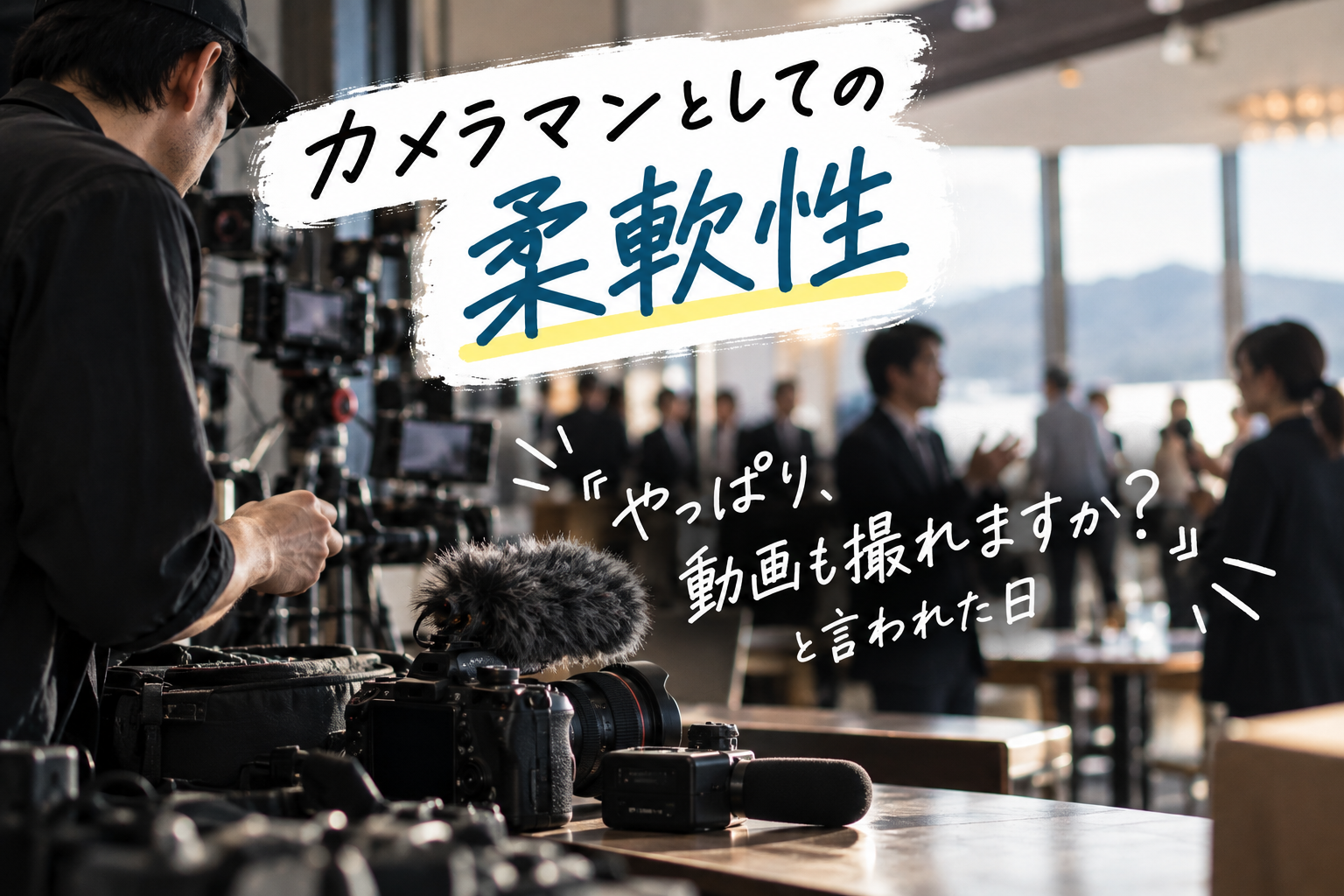
Flexibility as a Photographer
Journal / Case Study
The day we heard, “Actually, can you shoot video too?”
Recently we had a shoot that came together at short notice. Preparation time was tight, and it was a busy job.
At the first meeting, we planned to cover both photography and video. Later, the client got in touch: “Actually, we won’t need video. Just photos, please.”
To me, that felt like a bit of a shame. The shoot was a rare occasion that brought together people who almost never gather in one place. Photos matter, of course — but video could capture the atmosphere of the day and the participants’ voices, and be used later across social media, the website and promotion.
So I checked, just in case: “Are you sure you don’t need video? It’s a special opportunity, and footage could be really useful for future promotion.” The answer didn’t change: “Just photos this time.” And so video was officially off.
But something was nagging at me
On the day, we headed out for a photo-only job. Still, I had a feeling: “They might change their minds once they’re there.”
After many years of shooting, you develop that kind of instinct. Especially at events and conferences where lots of people gather, clients often realise only when they see the atmosphere in person that they want video too.
So I brought along the microphone we weren’t supposed to need. My assistant had also packed video-capable equipment, just in case.
We might not use it, and that would be fine. But it’s better than being unable to do anything if it’s needed. That was my thinking.
“Actually, can you shoot video too?”
And on the day, sure enough, there it was: “Actually, can you shoot video too?”
Inside, I thought: “I knew it!” (laughs)
Seeing the atmosphere on site, the client decided it was too good an opportunity not to record on video. Then came another idea: interviewing the participants.
None of that was in the original plan. But this time we had a microphone, my assistant had brought the equipment, and we were reasonably set up to shoot. As a result, we were able to handle the sudden change. If we’d brought no video gear at all because it was “photos only,” it would have been very difficult.
Flexibility isn’t just saying “yes”
This experience reminded me of something: flexibility doesn’t mean taking on anything on the spot.
If you’re suddenly asked to shoot video without the right equipment, you can’t. With interviews especially, audio matters as much as picture. A camera’s built-in microphone can leave voices hard to hear over background noise, and there’s only so much you can fix in the edit.
That’s why preparation matters. Video had been cancelled, yet we prepared for the possibility that it might be needed. We could be flexible not by chance, but because we were prepared.
Clients notice things on the day, too
I don’t think it’s a bad thing at all when clients change their minds partway through. If anything, it’s natural.
At the planning stage, there are budgets, schedules and priorities to weigh, and dropping video may be the right call at that moment. But standing on site, things look different: the atmosphere of the venue, the energy of the participants, the speakers’ words, the sight of people who rarely meet all gathered in one place.
Witnessing moments like that, people think, “We really should capture this.” I don’t see that as a mere change of plan. I see it as the moment someone discovers new value on the day — and I want to respond to that wherever I can.
Experience means being able to imagine a little ahead
Working as a photographer for many years builds up all kinds of experience beyond technique. You start to think: “With this schedule, we may run short of time.” “The light here will change in the afternoon.” “With an event like this, they may want video later.”
Of course, you can’t predict everything, and sometimes you’re wrong. But experience lets you think ahead about likely problems and what might be needed — and those small preparations can make a big difference on the day. This time, the decision to bring one microphone paid off.
Additional work naturally needs additional preparation and cost
One important point: being flexible is not the same as doing everything for free.
Photography and video need different equipment, crew and post-production. Even when we can respond to a sudden extra request, additional work comes with an appropriate fee. And this time we happened to have the equipment; that won’t be true on every job.
What matters is judging correctly what is and isn’t possible, and discussing it with the client. If we overreach and both the photos and the video end up half-done, there’s no point. Flexibility requires a cool head, too.
Shooting only what you’re told is a missed opportunity
Our job is to create the photos and video clients ask for. But I think stopping there is a missed opportunity.
What does the client want to communicate? How will they use the images in future? What value does this shoot hold? Thinking about those questions together sometimes lets us propose more than the original brief.
The client always makes the final decision. But as photography and video specialists, we can suggest: “You could also use it this way,” or “Since we’re here, it might be worth capturing this footage too.” And even if a suggestion isn’t taken up at first, it’s worth continuing to think about what’s possible on the day.
Finally: flexibility comes from preparation
On this shoot, video was cancelled and then needed again on the day. A slightly curious turn of events — but we were able to deliver.
It won’t always work out so well. But it reminded me that flexibility isn’t scrambling to react to sudden changes — it’s preparing for the possibility that they’ll happen.
Taking good photos is essential, of course. But imagining what might happen on the day, putting yourself in the client’s shoes, and finding the best way forward when plans change — those are important professional skills too.
Above all, leaving as little room as possible for the regret of “we really should have filmed that.” There’s a surprising amount we can do to make sure of it.
The microphone I brought just in case — equipment that might never have left the bag — ended up playing an unexpected role.
Be prepared, and you’ll have nothing to worry about. It’s a saying that fits a photographer’s work perfectly.
LS STUDIO — Photography & Film Production
Based in Kyoto, we create advertising photography, architecture and hotel photography, portraits, event coverage and film. Beyond technical skill, we value good judgement on set, flexibility, and proposals grounded in an understanding of our clients’ goals.